Article
Your Team Is Neurodiverse. Your Ways of Working Should Be Too.
• Leadership, Teamwork, Neurodiversity
-f58c1330.jpg)
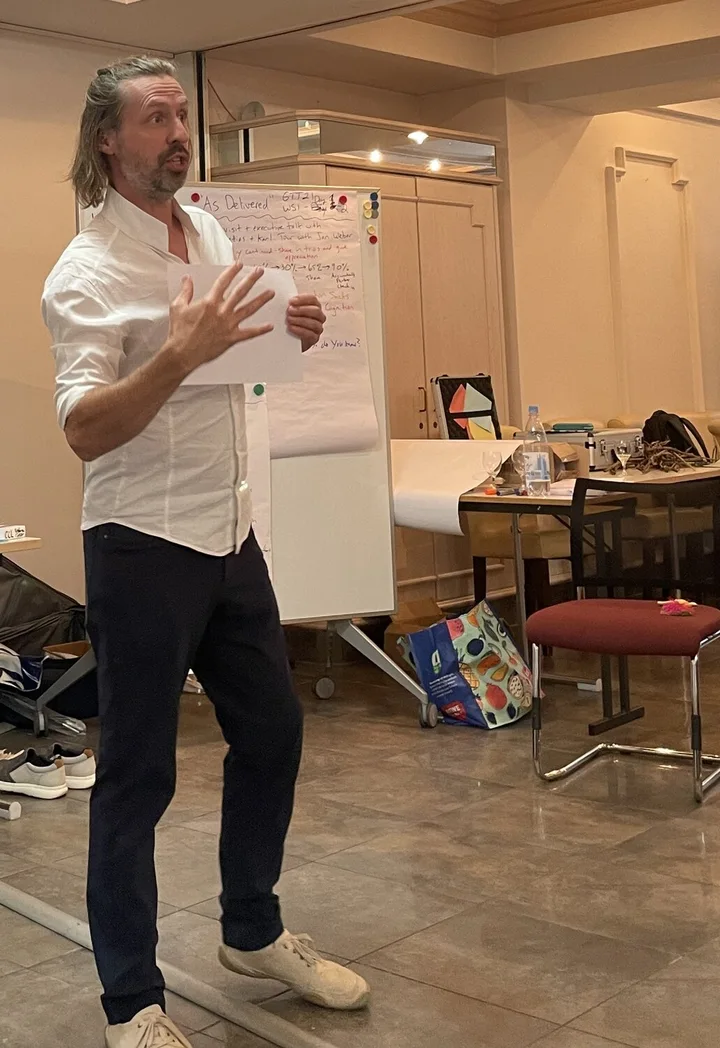
Matthias Orgler, M.Sc.
Engineer, founder, and organizational advisor

Someone recently wrote to me:
“I wish there were a version of Scrum for neurodivergent people.”
That sentence stayed with me.
I do not think we need another version of Scrum. This is not really about Scrum at all.
It is about how we design work.
Most workplaces still reward a narrow model of the ideal employee: think quickly, speak immediately, tolerate interruptions, concentrate amid noise, decode unwritten expectations, and remain equally productive regardless of what is happening around you.
People who match that model are often mistaken for stronger performers.
People who do not are told to improve their communication, speak up more, become more flexible, pay closer attention, calm down, or try harder.
Perhaps the person is not the problem.
Perhaps the work environment was designed too narrowly.
A neurodiverse team contains people who process information, communicate, concentrate, respond to stimulation, and relate to others in different ways. Traditional ways of working make some of those differences unnecessarily difficult.
Change the environment, and more people can contribute.
“Normal” ways of working are not neutral
A meeting in which everyone must respond immediately rewards quick verbal processing.
An open office rewards people who can filter noise and movement.
An informal culture full of unwritten rules rewards people who can infer expectations.
A workplace built around spontaneous calls and messages rewards people who can switch attention easily.
None of these arrangements is neutral. Each one makes a particular way of working the price of admission.
That does not mean there is one perfect alternative for every neurodivergent person. The evidence is nowhere near that simple.
A systematic review of physical workplace adjustments found promising indications for measures such as quieter spaces, lighting adjustments, headphones, private work areas, and remote work. It also found that the research was methodologically weak and focused predominantly on autistic workers. Weber and colleagues
A separate review covering 143 studies relevant to adults with ADHD found remarkably little research evaluating workplace-specific interventions. Most of the existing research focused on medication rather than work design. Lauder, McDowall and Tenenbaum
So this is not a scientifically validated formula for the perfect neuroinclusive workplace.
It is an evidence-informed collection of practices I have used in real teams, combined with a simple question:
Which parts of our way of working prevent good people from doing good work?
Here are five places to look.
1. Protect attention instead of treating it as permanently available
Interruptions are expensive.
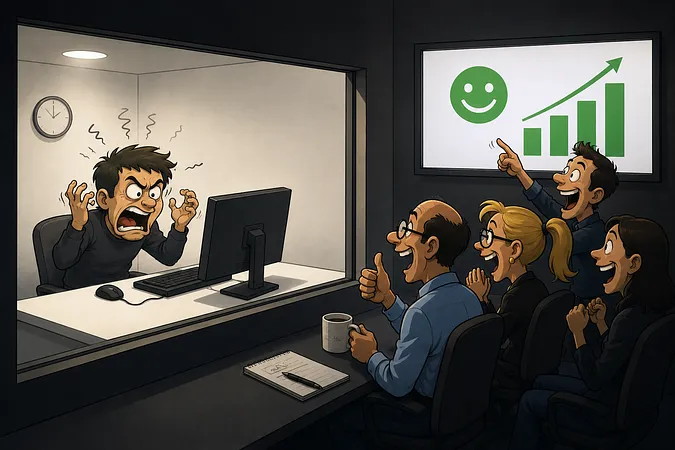
In an experiment on interrupted work, Gloria Mark and her colleagues found that people compensated by working faster. That speed came with more stress, frustration, time pressure, and effort. The Cost of Interrupted Work
“Hey, do you have five minutes?”
The interruption has already happened.
This is one reason a properly used Daily Scrum can help a team, including people who need long periods of concentrated work.
I have seen daily coordination help when it genuinely replaced random interruptions.
The team used one predictable moment to clarify dependencies, identify where people needed to work together, and protect the rest of the day for focused work.
It failed when management simply added a status meeting while all the existing interruptions continued.
Then it was not protection. It was one more interruption.
The useful practice is not “hold a Daily Scrum.” The useful practice is to create a predictable coordination point that reduces disruption during the rest of the day.
Use it to:
- Arrange pairing and group work.
- Ask for help without demanding it immediately.
- Identify dependencies.
- Agree on periods for concentrated work.
- Clarify who is available and when.
- Decide what actually qualifies as urgent.
Keep detailed problem-solving between the people who need it. Everyone else should be allowed to leave.
If possible, place the coordination point next to a transition that already exists, such as arriving in the morning, coffee, or lunch. Do not fragment another useful block of concentration just to put a meeting in the middle of it.
But do not steal the break either. A five-minute coordination point beside lunch is different from turning lunch into a meeting.
A predictable meeting still has a cost. The test is whether it reduces the team’s total disruption.
I have written more about the practical mechanics in The Surprising Way Daily Stand-Ups Foster Deep Work.
The broader principle is simple:
Stop organizing collaboration through ambush.
2. Change how ideas enter the room
Many meetings reward the person who can formulate an opinion fastest.
That person speaks first. Their idea becomes the reference point. Everyone else must now react to it.
This disadvantages people who need more time to process a question, find the right words, translate their thinking, test an argument, or gather enough confidence to speak in front of a group.
It also disadvantages non-native speakers and people working in cultures where making a mistake in public is heavily penalized.
Their silence tells you very little about the quality of their thinking.
One practice I use frequently is 1-2-4-All, a Liberating Structure.
The sequence is simple:
- Everyone reflects on the question alone.
- People exchange their thoughts in pairs.
- Two pairs join and develop their thinking as a group of four.
- Insights are shared with everyone.
I have seen people embrace this structure who otherwise found it difficult to contribute in a group.
By the time someone speaks to everyone, they have already formed an idea, found the words, discussed it with another person, heard objections, and improved it.
They are no longer stepping cold into the social risk of addressing the whole room.
The method does more than help quiet people speak. It changes how ideas gain influence.
The fastest speaker does not automatically have the best idea. They merely have the idea that reached the room first.
1-2-4-All still needs judgment. Some people dislike spontaneous pairing. Some need more than one minute to reflect. Some would rather contribute in writing. A useful facilitator adapts the method:
- Share substantial questions in advance.
- Allow written contributions.
- Provide enough individual thinking time.
- Do not force every person to present.
- Preserve dissenting ideas that a pair or group did not select.
The goal is not to make everyone participate in the same way. The goal is to give more kinds of thinking a route into the work.
For a detailed facilitation guide, including variations, see Improve Workshops and Retrospectives with 1-2-4-All.
3. Replace unwritten rules with explicit agreements
Every team has communication rules.
Many teams simply pretend they do not.
Is the main group chat a noisy social room or a quiet operational channel?
Does tagging someone mean “read this when convenient” or “I need an answer”?
Is silence agreement?
When is a call appropriate?
Where are decisions recorded?
How quickly is anyone expected to respond?
When those rules remain implicit, people have to reverse-engineer them.
Create team working agreements
One team might decide that its main chat is deliberately lively. People can share jokes, links, thoughts, and half-formed questions. Nobody is expected to read everything. Important requests use tags, and decisions are recorded elsewhere.
Another team might reserve its main channel for information requiring the team’s attention. Social conversation and detailed discussion happen somewhere else.
Neither choice is inherently correct.
The value lies in knowing whether you have entered the quiet room or the noisy room.
Useful working agreements can cover:
- Which channel serves which purpose
- Expected response times
- What tagging someone means
- What qualifies as urgent
- When to use writing, a call, or a meeting
- Where decisions and responsibilities are documented
- Which periods are protected for focused work
- How colleagues indicate that they are unavailable
- When the team will revisit an agreement that is not working
A working agreement is the team’s current best attempt. It is not a constitution carved into stone.
Write personal user manuals
Even with clear team rules, people still work differently.
Teams waste an astonishing amount of energy interpreting behaviour.
Why is she so quiet?
Why is he asking so many questions?
Why did that message sound abrupt?
Why does this person become emotional during disagreement?
Why has my colleague not replied even though I can see them online?
A personal user manual gives colleagues a better starting point.
It might include:
- How I prefer to receive feedback
- How I behave when I am concentrating
- How I respond under pressure
- How I like people to ask me for help
- How I prefer to receive reminders
- What people frequently misunderstand about me
- The conditions under which I do my best work
- Things that drain or frustrate me
- Things that make me laugh
- My favourite coffee, music, food, or terrible joke
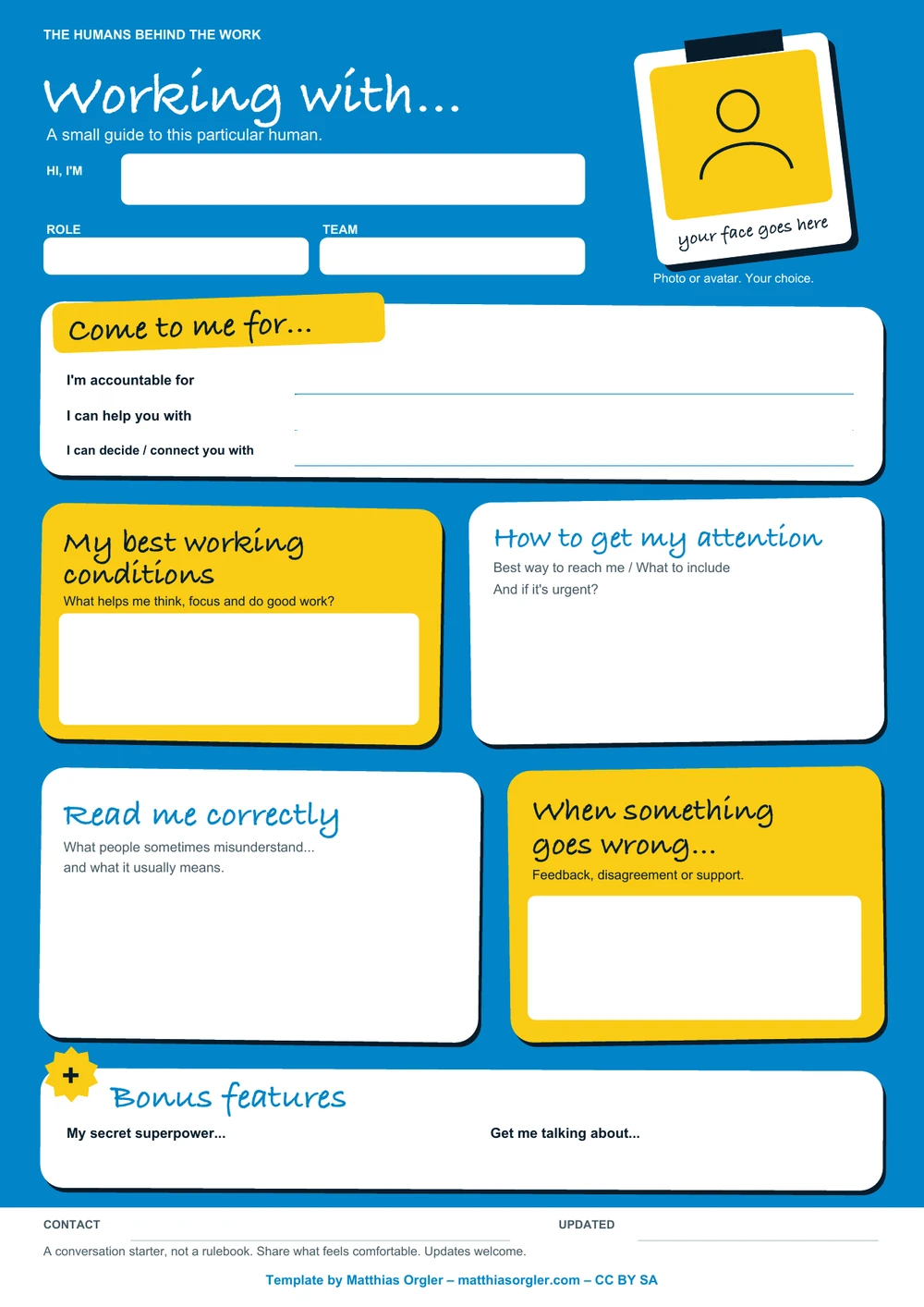
If you want to try this with your team, download my fillable one-page Working with me: personal user guide. It covers responsibilities, working conditions, communication preferences, possible misunderstandings, and feedback.
Someone might write:
When I become quiet, I am usually thinking. Please do not assume that I disagree or that your idea is bad.
Another person might write:
I want reminders. If we agree on a deadline, please check in before it arrives rather than waiting until I have missed it.
Someone else might want the opposite:
Once we have agreed on a task and deadline, repeated reminders make it harder for me to concentrate. Please trust me unless I tell you that I need help.
Different people need different things. That is the point.
A personal manual is not a permanent personality specification. People change. Situations change. The manual should change with them.
It is also not an excuse.
“I use sarcasm” may help colleagues understand someone’s intent. It does not require them to tolerate cruel remarks.
A useful manual says:
Here is how you can work well with me.
It does not say:
Here is why I never have to adjust my behaviour.
4. Build enough human connection to interpret difference generously
Explicit agreements help people understand what a colleague needs.
Human connection helps them care.
Teams work better when people understand that their colleagues have histories, responsibilities, hopes, fears, pressures, good days, and terrible days.
I use several practices to create that understanding.
Personal Histories
The Personal History Exercise begins with a few simple questions:
- Where were you born?
- How many siblings do you have?
- What challenge or responsibility from your youth shaped you?
The questions start with facts and gradually become more personal. People choose how deeply they answer.
This is not another icebreaker in which everyone shares a “fun fact.” It gives colleagues a glimpse of the person behind the role.
I have published a complete guide to the Personal History Exercise.
Lifelines
A Lifeline goes deeper.
Each person draws a simple curve representing important highs and lows across their life or career. They then explain the parts they want to share.
This can reveal why someone values stability, responds strongly to uncertainty, avoids conflict, challenges authority, or cares intensely about a particular kind of work.
People decide what belongs on their Lifeline. The exercise works because it creates understanding, not because it extracts the most painful story from the room.
“How Are You Really?” walks
Take five or ten minutes. Walk with a colleague. Ask:
“How are you really?”
Then listen.
The person may tell you the whole story. They may say only that they are having a difficult day. They may not want to explain.
The question creates an opening.
Walking side by side also changes the conversation. You are no longer sitting across a table performing a formal meeting. For some people, that makes talking easier.
More importantly, the practice treats someone as a human being rather than a production unit that has temporarily turned red on a dashboard.
Moving Motivators
Moving Motivators gives people cards representing different intrinsic motivators and asks them to arrange the cards according to their importance.
I used it successfully with a team experiencing difficult conflict.
One person might value order highly. Another values freedom.
Suddenly, an argument over technology or process is no longer a battle between the sensible person and the difficult person. It may reflect two legitimate needs pulling in different directions.
The cards do not resolve the conflict automatically. They give the team better language for understanding it.
They are also not a personality test. Motivations change with circumstances. The conversation matters more than the final order of the cards.
I explore Personal Histories, Lifelines, Moving Motivators, “How Are You Really?”, and other trust practices in Build Trust to Ignite Motivation.
5. Stop trying to fix people inside badly designed work
Social exercises cannot rescue a badly designed work system.
A friendly team can still exhaust people with unclear priorities, contradictory instructions, invisible decisions, sudden changes, and tasks with no recognizable finish line.
Practical neuroinclusive work design includes:
- Clear priorities
- Explicit responsibilities
- Concrete definitions of what “done” means
- Large tasks divided into manageable steps where useful
- Written records of decisions
- Advance notice of significant changes where possible
- Clear explanations when plans change
- Regular but non-intrusive check-ins
- More than one way to receive and process important information
Written communication is not universally more accessible.
Some people process writing more easily. Others need to talk something through. Some benefit from text-to-speech, speech-to-text, diagrams, examples, checklists, or an opportunity to ask questions individually.
Replacing one mandatory communication mode with another does not create flexibility.
Offering workable options does.
Give people meaningful control over their environment
Noise is not a minor preference when it makes concentration impossible.
Neither are painful lighting, constant movement in someone’s field of vision, uncomfortable clothing requirements, back-to-back meetings, or a workplace with nowhere to retreat.
Possible improvements include:
- Quiet and collaborative work areas
- Permission to use headphones
- Adjustable lighting or screen brightness
- Flexible seating
- Space to move or stand
- Breaks between demanding interactions
- Remote participation where the work permits it
- Fewer unnecessary camera requirements
- Meeting agendas in advance
- Written contributions before or after a discussion
- Time without meetings or notifications
The UK’s Advisory, Conciliation and Arbitration Service lists examples including quiet spaces, sensory controls, screen readers, speech-to-text software, visual planners, regular check-ins, additional planning time, step-by-step instructions, and advance notice of changes.
It also makes an essential point: an adjustment helping one person may not help someone else with the same condition. Acas guidance on neurodiversity at work
There is no single neurodivergent working style.
That is exactly why a workplace designed around one supposedly normal working style fails.
Run a 45-minute Neuroinclusive Team Reset
Do not finish this article by creating a committee, launching an awareness programme, or adding seven new rituals to everyone’s calendar.
Take 45 minutes with your team.
Step 1: Let everyone think before anyone dominates
Use 1-2-4-All with this question:
What about the way we currently work makes it unnecessarily difficult to contribute your best work?
Give people time to think alone. Then let them compare experiences in pairs and groups of four before collecting the results.
Allow written answers too.
Time: 12 minutes
Step 2: Make the patterns visible
Group the answers under five headings:
- Attention: interruptions, meetings, notifications, and concentrated work
- Participation: who speaks, how ideas are gathered, and how decisions are made
- Clarity: priorities, responsibilities, communication rules, and definitions of done
- Human connection: how well people understand and support one another
- Environment: noise, lighting, workspace, movement, remote access, and digital tools
Do not debate every contribution. First make the system visible.
Time: 8 minutes
Step 3: Choose one change
Choose one recurring obstacle that the team can influence.
Select a change that removes or replaces something. Do not simply add another meeting, form, check-in, or responsibility.
Examples:
- Replace spontaneous morning interruptions with a short coordination point followed by protected focus time.
- Replace open discussion as the default with individual reflection followed by 1-2-4-All.
- Replace an ambiguous group chat with an explicit agreement about channels, tags, and response expectations.
- Replace undocumented verbal decisions with a short written decision record.
- Replace one fixed workspace expectation with access to quiet and collaborative areas.
One change is enough.
Time: 10 minutes
Step 4: Turn the idea into an observable agreement
“Communicate better” is useless.
Write down what people will actually do.
For example:
We coordinate collaboration at 09:30. Unless something is genuinely urgent, 10:00–12:00 is protected focus time.
Or:
Questions are sent with the meeting agenda one day in advance. People may contribute before, during, or after the meeting in the shared document.
Or:
Our main group chat is conversational and optional to read. A direct tag means a response is needed. Decisions are recorded on the project page.
The agreement should be specific enough that everyone can tell whether it happened.
Time: 10 minutes
Step 5: Decide when you will inspect the result
Choose a review date, usually two weeks later.
Ask:
- What became easier?
- What became harder?
- Who benefited?
- What unexpected problem did the change create?
- Should we keep, adapt, or stop it?
This is an experiment, not a declaration of permanent policy.
Time: 5 minutes
Change the environment and see what becomes possible
You do not need to implement every practice in this article.
That would merely replace one rigid system with another.
Choose one place where the way work is organized currently loses useful attention, ideas, or energy. Change the environment instead of asking people to become better at enduring it. Then observe what becomes possible.
A team becomes neuroinclusive when people no longer have to fight the way work is organized before they can begin contributing to it.
Team workshops & coaching
Help your team work better together.
I work with teams on collaboration, decisions, and getting work done. We can start with a focused workshop or work together over time—shaped around your team’s actual challenges.
Discuss working with your team