Article
Want High-Performing Teams? Focus on Motivation That Lasts
• Agile Values, Leadership, Mindset, Coaching
-f58c1330.jpg)
Matthias Orgler, M.Sc.
Engineer, founder, and organizational advisor

A Path to Authentic Engagement and Success
In our agile profession, where adaptability and speed are often hailed as the keystones of success, lies an often-overlooked element that quietly dictates the true efficacy of any agile team: intrinsic motivation. This invisible, yet powerful force is the heartbeat of innovation and productivity in agile environments. But what ignites this inner drive in team members, and more importantly, how can agile coaches cultivate it to achieve authentic engagement and outstanding results?
Gone are the days when extrinsic rewards ruled the roost, dictating performance with their siren call of bonuses and promotions. Today’s agile landscape calls for something deeper, more sustainable. It demands an understanding of what really fuels our creativity and commitment from within. This article delves into the world of intrinsic motivation, exploring its profound impact on agile teams and offering insights into fostering an environment where this natural, self-sustaining form of motivation flourishes.
As we embark on this journey, we’ll unravel the mysteries of what truly motivates us beyond external incentives. We’ll confront the challenges of removing demotivators that stifle creativity, and we’ll explore innovative strategies to encourage a sense of autonomy, mastery, and purpose—key ingredients in the recipe for intrinsic motivation.
So, are you ready to unlock the full potential of your agile team? To turn the tides from merely functioning to phenomenally flourishing? Join me as we explore the path to authentic engagement and success, a journey not just about doing agile, but being agile at the very core.
The Power of Intrinsic Motivation

Intrinsic motivation refers to engaging in activities for their own sake, where the motivation comes from within the individual. This form of motivation is driven by interest or enjoyment in the task itself. In the context of agility, intrinsic motivation is pivotal because it aligns with agile’s core principles such as autonomy, mastery, and purpose. When team members are intrinsically motivated, they tend to have higher levels of creativity, satisfaction, and long-term engagement.
The idea of intrinsic motivation first arose in 1950. Harlow, Harlow and Meyer studied the behavior of rhesus monkeys in manipulating a mechanical puzzle. Critically, the monkeys got no reward for successfully solving the puzzle. Despite getting no incentive, the monkeys learned to solve the puzzle and after a few days got much better at it than other monkeys. In a second part of the study, the researchers introduced extrinsic motivators like food to see what would happen. We will look at that part in the section about extrinsic motivation.
Deci & Ryan built on the Harlow/Harlow/Meyer study with their Self-Determination Theory (SDT). They postulated that intrinsic motivation is fostered by three basic psychological needs: autonomy, competence and relatedness. Further research has consistently shown that intrinsic motivation leads to higher quality of engagement and learning.
Benefits of Intrinsic Motivation in Agile Settings
Let‘s look at the numerous benefits of intrinsic motivation in agile settings (and not just there). Intrinsic motivation does not only enhance individual performance but also significantly contributes to the overall success and dynamic of agile teams.
- Enhanced Creativity and Innovation (including Better Decision-Making): Intrinsic motivation is a catalyst for creativity and innovation in agile teams. When individuals are internally driven, they’re more likely to explore new ideas and take creative risks. This openness to experimentation is essential for agile teams, fostering an environment where innovative solutions can flourish. Additionally, intrinsic motivation supports decentralized decision-making, empowering team members to make swift, informed decisions. This empowerment not only speeds up the decision-making process but also improves its quality. Team members, feeling a strong personal connection to their work, are more attuned to the project’s needs and committed to achieving excellence, leading to more effective and innovative outcomes.
- Improved Quality of Work: Teams driven by intrinsic motivation exhibit a higher quality of work. This stems from their deep engagement and personal investment in the tasks at hand. When the motivation comes from enjoying the work itself, there’s a natural inclination towards perfection and attention to detail. The drive to excel is not for external rewards but for personal satisfaction and pride, resulting in work that is thorough, thoughtful, and of superior quality.
- Increased Engagement and Commitment: Intrinsic motivation leads to a heightened sense of engagement and commitment among agile team members. This form of motivation comes from a genuine interest in the work and a desire to contribute meaningfully. As a result, team members are more dedicated, show greater perseverance, and are less likely to experience burnout. This sustained engagement is crucial for the long-term success of agile organizations. (Note: You should take care that increase intrinsic motivation does not lead to self-exploitation and overwork. Counter to intuition, in agile settings you might need to remind people to work less.)
- Better Team Collaboration: When team members are intrinsically motivated, they’re more inclined to collaborate effectively. The shared enthusiasm and genuine interest in the work foster a collaborative spirit. This environment encourages open communication, mutual support, and a collective pursuit of goals, all of which are key to successful agile teamwork.
- Greater Flexibility and Adaptability: Intrinsic motivation enhances a team’s ability to be flexible and adaptable – two core aspects of agile methodologies. Teams that are internally driven are more open to embracing changes and challenges. Their motivation is not tied to rigid external rewards, allowing them to pivot and adapt with enthusiasm and resilience in response to changing customer needs or unexpected hurdles.
- Long-Term Sustainability: Unlike extrinsic motivation, which can diminish over time or become less effective, intrinsic motivation is inherently sustainable. It does not rely on external rewards or recognition, which are often variable and temporary. This makes it a more reliable and enduring source of motivation for agile teams, ensuring long-term engagement and productivity.
- Alignment with Agile Principles: Focusing on intrinsic motivation aligns perfectly with the core principles of agility. Agile methodologies emphasize the importance of individuals and interactions, responding to change, and continuous improvement. Intrinsic motivation nurtures a culture that values these principles, ensuring that the team is not just practicing agile in form, but embodying its spirit in every aspect of their work.
Identifying and Removing Demotivators

So far we’ve seen that intrinsic motivation, the bedrock of agile productivity and innovation, is an innate force that drives team members. It’s crucial to understand that intrinsic motivation cannot be created externally; it’s either nurtured or hindered. This perspective brings to light a fundamental concept in team management: You cannot ‘motivate’ people in the traditional sense, but you can certainly demotivate them. Recognizing and removing demotivators is thus vital in creating an environment where intrinsic motivation can naturally flourish.
How Certain Workplace Factors Can Demotivate Agile Team Members
Several workplace factors can act as demotivators for agile teams. These include:
- Micromanagement: Overbearing supervision can stifle creativity and autonomy, leading to a lack of engagement.
- Unclear Goals or Objectives: Without clear direction, team members may feel lost, reducing their drive and commitment.
- Lack of Recognition: Failing to acknowledge individual and team achievements can diminish morale and motivation.
- Inadequate Resources: Insufficient tools or support can frustrate team members, hindering their ability to perform effectively.
- Toxic Work Culture: A negative or non-supportive work environment can erode team spirit and motivation.
- Excessive Workload: Unrealistic demands can lead to burnout, significantly reducing motivation and productivity.
With these demotivators in mind, we can develop strategies to eliminate them.
Strategies to Eliminate Demotivators and Create an Environment Where Intrinsic Motivation Can Thrive
To mitigate these demotivators, consider implementing the following strategies:
- Foster Autonomy: Shift from micromanagement to a trust-based approach. Give team members the freedom to make decisions and manage their work, which can enhance their sense of responsibility and ownership.
- Set Clear Goals: Clearly define objectives. This clarity helps team members understand their role in the bigger picture, boosting motivation and focus.
- Recognize and Celebrate Achievements: Regularly acknowledge both individual and team accomplishments. Recognition should be specific, sincere, and aligned with the team’s values and goals.
- Provide Necessary Resources and Support: Ensure that teams have access to the tools, training, and support they need. This empowers them to perform their job efficiently and effectively.
- Cultivate a Positive Work Culture: Build a culture of respect, collaboration, and support. A positive work environment encourages team members to contribute their best.
- Balance Workloads: You most likely have to reduce workloads to get more value. Ensure that teams have enough breathing room for unecertainty, experimentation, learning and rest. Always remember: a fully utilized road is called a traffic jam.
By addressing these demotivators, agile coaches and leaders can create a conducive environment for intrinsic motivation, leading to higher engagement, satisfaction, and productivity in agile teams.
The Pitfalls of Extrinsic Motivation
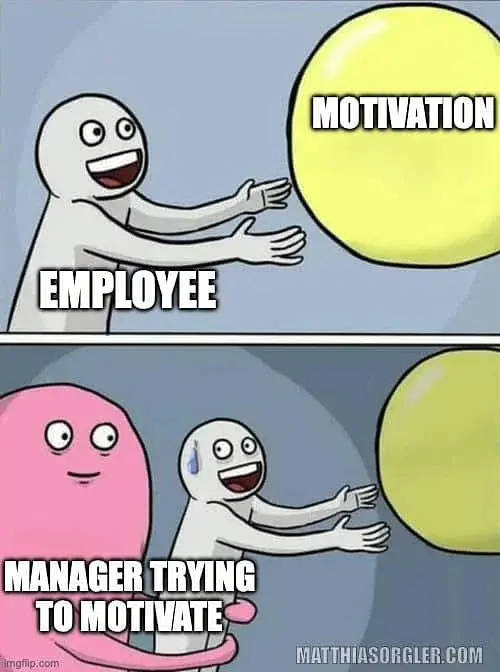
Extrinsic motivation stands in stark contrast to intrinsic motivation. It involves performing an activity to achieve an external reward or avoid a punishment. This type of motivation is not about the enjoyment of the task itself but about the outcome it leads to. In agile environments, relying too heavily on extrinsic motivation (like bonuses, promotions, or other rewards) can lead to diminished intrinsic motivation, reducing creativity and long-term commitment.
Studies have shown that extrinsic rewards can sometimes diminish intrinsic motivation, a phenomenon known as the overjustification effect. When people are given external rewards for tasks they already find motivating, their intrinsic motivation can decrease.
This effect has been proven as early as in the studies of Harlow/Harlow/Meyer in 1950. Introduction of food rewards in the study of the intrinsically motivated rhesus monkeys tended to disrupt instead of facilitate their performance. Now imagine what bonus and promotion systems do to the intrinsic motivation of employees.
You could try this with any child to see the shocking effects. Pick something your child loves to do, like building cars from Lego bricks. Now start rewarding her for every car made. While you will likely see the rate of cars produced to actually increase at first, three things will happen pretty soon: The quality of cars will go down, followed by the rate of Lego car production. And sooner or later, your child will ask for increased rewards to sustain rate and quality. Congratulations, you just started a downwards spiral that can only end in high production cost, low quality & volume, as well as a demotivated child. You effectively killed intrinsic motivation.
Extrinsic motivation kills intrinsic motivation.
(Here is a little more nuance to this quote: Is Extrinsic Motivation Really Bad? Understand the Balance for Great Leadership)
How Extrinsic Motivators can Lead to Negative Outcomes
In agile environments, where adaptability, creativity, and long-term vision are key, relying heavily on extrinsic motivators can inadvertently steer teams towards less desirable outcomes. This section explores how extrinsic motivation can lead to short-term thinking, reduced creativity, and a misplaced focus on rewards rather than the quality of work.
-
Short-Term Thinking:
Example: Consider a scenario where an agile team is promised a bonus for completing a release ahead of schedule. While this might initially boost productivity, the focus shifts to meeting deadlines at any cost. The team might start cutting corners or overlooking important aspects of product development to achieve short-term goals. This approach not only compromises the quality and sustainability of the project but also neglects long-term strategic thinking and learning, which are essential in agility. In some cases, extrinsic motivation can lead morally or legally questionable shortcuts. -
Reduced Creativity:
Example: If a team is rewarded based on the number of features developed or bugs fixed, members might prioritize quantity over quality. In such an environment, taking risks or investing time in innovative solutions becomes less appealing, as these activities don’t directly contribute to the rewarded metrics. Over time, this can lead to a homogenized way of thinking where creative and out-of-the-box ideas are undervalued and underexplored. The team’s ability to innovate and adapt to new challenges diminishes, contradicting the agile principle of continuous improvement. -
Focus on Rewards Rather Than Quality Work:
Example: Imagine an agile team where performance reviews and promotions are based predominantly on visible output and adherence to prescribed processes. In this setting, team members might start focusing more on how their work is perceived rather than its actual value. The intrinsic satisfaction of doing a good job takes a back seat to external validation. This mindset can lead to a culture where the true essence of agility – collaboration, quality, and customer-centric development – is overshadowed by a race for rewards and recognition.
These examples demonstrate how extrinsic motivators, while potentially beneficial in the short term, can ultimately undermine the core objectives and values of agility and your business in general. Agile coaches and leaders need to be mindful of these pitfalls and strive to create a balance where extrinsic rewards support rather than detract from intrinsic motivation and the overarching goals of agile practice.
Examples of Extrinsic Motivation Pitfalls
Here are a few real-world examples to make these concepts more tangible.
-
Short-Term Thinking - Volkswagen Diesel Scandal:
In the Volkswagen Diesel Scandal, the company installed software in diesel engines to cheat on emissions tests. This decision, driven by the goal to meet emissions standards quickly and cost-effectively, demonstrates short-term thinking. The focus on immediate results and external rewards (market success, regulatory compliance) led to morally and legally questionable actions, severely damaging the company’s reputation and resulting in significant financial and legal consequences. -
Reduced Creativity - Kodak’s Fall with Digital Photography:
Kodak, once a leader in the photographic film industry, failed to adapt to the digital photography revolution. Despite having developed a digital camera in the 1970s, Kodak prioritized its existing film-based business model, focusing on immediate profit rather than investing in innovation. This focus on short-term financial gains over creative, forward-thinking development led to the company’s decline, illustrating how extrinsic motivators (like immediate profit margins) can stifle creativity and long-term growth. -
Focus on Rewards Rather Than Quality Work - Wells Fargo Account Fraud Scandal:
The Wells Fargo account fraud scandal is an example of how a focus on extrinsic rewards can overshadow the quality and ethics of work. Employees, driven by the pressure to meet aggressive sales targets and the lure of bonuses, engaged in fraudulent practices like creating millions of unauthorized bank and credit card accounts. This scandal highlights how an overemphasis on external rewards and metrics can lead to unethical behavior and a degradation of service quality and trust.
These examples from different industries illustrate the pitfalls of relying too heavily on extrinsic motivation, underscoring the need for a more balanced approach that prioritizes intrinsic motivation, ethical behavior, and long-term strategic thinking.
Balancing Intrinsic and Extrinsic Motivation
The art of balancing intrinsic and extrinsic motivation is crucial. While the heart of agility thrives on intrinsic motivation, understanding the role and limitations of extrinsic motivators is key to nurturing a productive, creative, and ethical workplace.
Extrinsic motivation, though effective in certain contexts, has its clear limitations. Research indicates that for algorithmic tasks – those that follow a set formula or routine – extrinsic rewards can be effective in boosting productivity in the short term. However, even in these scenarios, the reliance on external rewards can lead to problems. For instance, studies by Dan Pink (in his book “Drive: The Surprising Truth About What Motivates Us”) and others have shown that while extrinsic motivators can increase output for mechanical tasks, they often reduce creativity and cognitive skill in more complex tasks. This dichotomy highlights the nuanced role of extrinsic motivation in a workplace that increasingly values innovation and adaptability.
Even in environments where extrinsic motivation seems beneficial, it can lead to unintended consequences. In the realm of algorithmic tasks, the overemphasis on rewards can create a culture of ‘doing just enough to meet the target,’ stifling any initiative beyond the defined parameters. It can also lead to unethical behavior, as seen in numerous corporate scandals where the pursuit of rewards overshadowed moral and legal considerations. Research even showed that our brain reacts to extrinsic rewards almost identical as it reacts to illegal drugs – including the phenomenon of an ever increasing dosage to achieve the same effect (Drive by Daniel Pink).
Abandoning extrinsic motivation systems doesn’t imply that aspects like salary or recognition become irrelevant. Rather, their role is reframed. Salary, for instance, can be seen as a hygiene factor – essential for satisfaction but not a motivator for higher performance (Frederick Herzberg's Two-Factor Theory). Recognition, when used, should be aligned with intrinsic values, acknowledging not just the outcomes but also the effort, creativity, and collaboration involved. You might even want to applaud experiments and decision-making even in the face of complete failure in outcome.
When using extrinsic motivators, careful consideration is necessary. They should not overshadow the intrinsic joy of work or the core values of agility. For example, bonuses or rewards tied to team collaboration and innovation can reinforce intrinsic motivation rather than replace it.
So, while intrinsic motivation stands at the forefront of agile success, understanding and carefully integrating extrinsic motivators is essential. The goal is to create an environment where the intrinsic joy of work, continuous learning, and a sense of purpose drive the team, with extrinsic motivators playing a supportive, rather than central, role.
Strategies to Foster Intrinsic Motivation
In the agile coaching and leadership landscape, fostering intrinsic motivation is not just a goal, but a journey of continuous improvement and understanding. Agile coaches and leaders play a pivotal role in cultivating an environment where intrinsic motivation can thrive. Below are practical, hands-on tips to encourage intrinsic motivation in agile teams:
1. Ensure Autonomy:
- Empower Decision-Making: Allow team members to have a say in how they approach their work. Encourage them to make decisions related to their tasks and methodologies.
- Create Self-Organizing Teams: Foster teams that manage themselves, decide on their workflow, and solve problems collaboratively. For example, Scrum heavily pushes for developers to decide on how they work.
- Respect Individual Working Styles: Understand that each team member may have a unique way of working. Respect and accommodate these differences where possible. Don‘t be afraid of a fragmentation of working styles – embrace the diversity.
Spotify’s approach to team organization, known as the squad model, exemplifies autonomy in action. Each squad (small, cross-functional team) operates like a mini-startup, with the freedom to choose its own working methods and make decisions independently. This autonomy has been key to Spotify’s ability to innovate rapidly and adapt to changing market demands. Always keep in mind that the squad model worked well for Spotify at a certain moment in their development and a certain state of their organization. Instead of blindly copying such an approach, learn how it fosters autonomy and adapt it to your organization. While nobody should just copy the so called “Spotify Model“, there is much to learn from their ideas and experiments.
2. Encourage Mastery:
- Provide Opportunities for Skill Development: Offer training sessions, workshops, or allocate time for team members to pursue learning in areas of their interest.
- Set Challenging but Achievable Goals: Challenge team members with goals that stretch their abilities, but are still within reach. This encourages growth and skill development. Encourage them to set stretch goals for themselves to grow.
- Promote a Growth Mindset: Encourage team members to view challenges as opportunities to grow rather than insurmountable obstacles. Provide room and positive feedback for this growth.
Google famously implemented the 20% time policy, where employees spend 20% of their time working on projects they are passionate about, even if these projects don’t align directly with their job responsibilities. This initiative led to innovations like Gmail and AdSense, showcasing how giving employees time to pursue mastery in areas of personal interest can lead to significant breakthroughs. It also helped retain highly skilled talent, by solving the dilemma of staying at Google vs creating their own start-up idea.
The SAFe framework also emphasizes time for innovation, learning and growth by institutionalizing the IP (innovation & planning) iteration. No work can be planned for these 2 weeks and much of the time is available for hackathons, learning and growing. Sadly, many real-world SAFe implementations I’ve seen don‘t take the IP iteration idea seriously.
Objectives in SAFe are a way to let teams set their own, ambitious goals. While the idea is great, some real-world cases of SAFe I‘ve seen replaced self-assigned team objectives with top-down goal-setting.
OKRs (Objectives and Key Results) are another example of autonomous goal setting. OKRs have the idea of bottom-up stretch goals built in. Teams come up with their own objectives they believe will add to the bigger goal of the organization. Actually achieving the key results 100% of the time is seen as a warning sign that teams are not challenging themselves enough to grow. Sadly, OKRs are sometimes abused as a top-down goal-setting method, which totally defeats their purpose.
3. Cultivate a Sense of Purpose:
- Connect Work to Larger Goals: Regularly communicate how each team member’s work contributes to the overall objectives of the project and the organization. Not only Gen Z wants to have purpose in their work. While purpose might have been seen as an added bonus motivator before, we now know it‘s a central drive for high performance.
- Involve Teams in Goal Setting: Include team members in setting goals and defining the vision for projects. This involvement enhances their sense of purpose and commitment. Avoid making this just a show, but really encourage them to set their own goals.
Again, OKRs are one example to involve teams in goal setting. The same is true for objectives in SAFe and Sprint Goals in Scrum.
Outdoor clothing company Patagonia consistently aligns its business goals with its mission to save the planet. This alignment of work with a higher purpose motivates employees beyond just financial gain. Patagonia’s commitment to environmental causes has fostered a deeply engaged workforce and a strong company culture.
4. Highlight the Importance of Meaningful Work:
- Align Tasks with Personal Interests: Whenever possible, help people to align tasks with their personal interests or strengths. This makes the work more engaging and meaningful. You also tap into unused potential as you engage the entire human being instead of just the work role.
- Showcase the Impact of Work: Share success stories, customer feedback, or other indicators of how the team’s work positively impacts the organization or its customers. Even better, put people in direct touch with customers – little is more satisfying than getting the feedback of the people you actually built the thing for. Direct customer feedback is a key in any agile framework.
TOMS Shoes’ “One for One” model, where for every pair of shoes sold, another pair is donated to a child in need, provides employees with a sense of contributing to a larger cause. This model has not only been a successful marketing strategy but also a motivator for employees, who see their work making a tangible difference.
5. Recognize Individual Strengths:
- Provide Personalized Feedback: Offer constructive and personalized feedback that acknowledges individual strengths and contributions. Although we want people to be self-managing, it still takes good coaching and leadership to help them uncover their true, personal potential.
- Utilize Diverse Skill Sets: Encourage team members to use their unique skills and perspectives, showing that their individual strengths are valued. Once you stop squeezing people into strict job roles, you might be surprised about the hidden talents some employees can bring to the table.
At Pixar, the ‘Braintrust’ meetings, where peers review each film in progress, operate on a foundation of mutual respect and recognition of each member’s strengths. These meetings are not about authority but about leveraging each person’s unique talents and perspectives to improve the films. This approach has been integral to the studio’s creative success.
6. Foster a Sense of Community and Shared Goals:
- Build Team Cohesion: Organize team-building activities and encourage informal interactions to strengthen team bonds. Be aware of Tuckman’s stages of team development, consider emotional check-ins at the start of a day or use exercises like Patrick Lencioni‘s personal history exercise to start building trust.
- Celebrate Milestones Together: Recognize and celebrate achievements as a team. This not only provides a sense of accomplishment but also reinforces the feeling of a shared journey. Celebrations don‘t always have to be big. A great deep dive on celebration culture is “The Power of Moments: Why Certain Experiences Have Extraordinary Impact“
Online shoe and clothing retailer Zappos is renowned for its emphasis on company culture and community. Zappos adopted a radical organizational structure called ‘Holacracy’ that replaces traditional hierarchy with self-organization. This structure, combined with a strong emphasis on company values and culture, has fostered a sense of community and shared goals. Employees are encouraged to take part in various team-building and cultural activities, enhancing team cohesion and a sense of belonging, which has been crucial to Zappos’ success as a customer-focused company.
7. Encourage Collaboration and Idea Sharing:
- Facilitate Open Communication: Create a safe environment for open dialogue, where team members feel comfortable sharing ideas and feedback. Make being open and vulnerable feel rewarding.
- Promote Peer Learning: Encourage team members to share knowledge and learn from each other, fostering a collaborative learning culture. For example, I saw great success in self-organized communities of practice. Several companies also had great success with organizing internal conferences or unconferences for their Scrum Masters, Developers or other experts.
IDEO, a global design company, is known for its collaborative and human-centered approach to problem-solving, known as design thinking. IDEO frequently organizes design thinking workshops where team members from different disciplines come together to brainstorm, prototype, and test ideas in a collaborative environment. This process not only fosters a culture of open communication and peer learning but also leads to innovative solutions and products. Such workshops have been instrumental in developing groundbreaking products and have established IDEO as a leader in design innovation.
By implementing the strategies in this section, agile coaches and leaders can create a fertile ground for intrinsic motivation, leading to more engaged, innovative, and productive agile teams. Remember, the key to fostering intrinsic motivation lies in understanding and supporting the individual needs and strengths of each team member, aligning them with the team’s collective goals.
Conclusion
In our rapidly evolving world, the true driving force behind successful teams isn’t found in the allure of external rewards but in the inner fire of intrinsic motivation. This article has journeyed through the landscape of intrinsic motivation, highlighting its unmatched power in unlocking creativity, driving quality, and fostering collaboration within agile teams.
As agile coaches and leaders, our mission extends beyond the implementation of methodologies and processes; it’s about igniting and nurturing the intrinsic motivation that resides within each team member. By focusing on autonomy, mastery, purpose, and meaningful work, and by tactfully balancing extrinsic motivators, we can cultivate an environment where intrinsic motivation flourishes.
Intrinsic motivation is more than a concept; it’s a transformative force. It’s the key to not only achieving but surpassing goals, to moving beyond mere efficiency to true innovation, and to transitioning from a group of individuals to a cohesive, thriving agile community.
Let this be our guiding principle: to foster a culture where intrinsic motivation is at the heart of every action, decision, and strategy. Herein lies the path to genuine engagement, sustainable success, and the true essence of agility.
Take this into your work
Work on the cases your framework does not solve.
Choose 1:1 case support, ACE, or a focused course based on what you need now.