
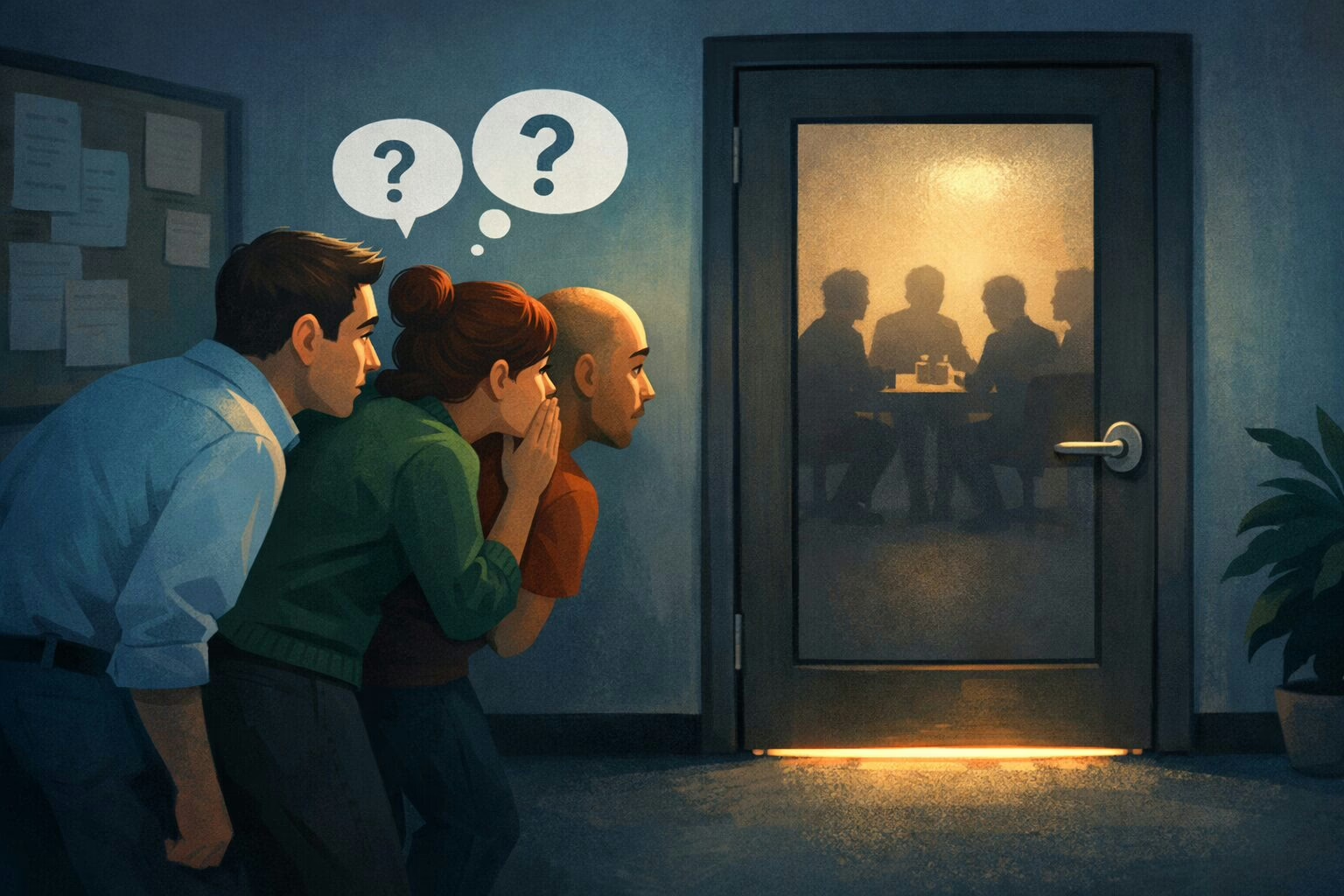
Most agile transformations don’t fail because “people resist change”. They fail because we design the change in a way that produces resistance – by running it like a Secret Change Club. A small circle meets. Plans. Aligns. Decides. And to everyone else it looks like a black box transformation – something is happening somewhere, but nobody can see what, why, or what’s coming next.
And when people can’t see what’s going on, they don’t fill the gap with optimism. They fill it with stories:
- “They already decided everything.”
- “This is the next management fad.”
- “This is going to hit us out of nowhere.”
That’s not “resistance to agility.” That’s a predictable outcome of how we set this up.
The clearest symptom: drive-by coaching
You’ll recognize the Secret Change Club by how it shows up on the ground. Trainings appear “somehow” on calendars. New rules show up without context. Priorities shift and nobody knows why. Coaches pop into teams, tweak things, and disappear again.
That’s drive-by coaching – coach appears, changes something, vanishes. Even if our intent is good, the effect is the same: people stop feeling included and start feeling managed.
Why this happens
When a LACE / guiding coalition turns into a black box, it’s usually one of two things – sometimes both.
1) The human reason: tunnel vision from good intent.
We’re motivated. We want progress. We want to make change happen. And we get so focused on doing that we forget to step outside our bubble and ask: “How does this look to everyone else?” From inside, it feels like focus. From outside, it feels like silence and surprise.
2) The red flag: we don’t understand agility beyond the surface.
We can talk frameworks. We can run trainings. We can roll out “ceremonies”. But we never make the mental leap that the transformation itself must be run in an agile way. If we design it in private, roll it out in phases, manage “stakeholders”, and hope trust appears, we’re not running an agile transformation – we’re running a traditional waterfall change program in an agile costume. How can we hope for people to become agile, if we don’t model the way?
The warning signs show up immediately
You don’t have to wait six months to see whether the Secret Change Club is forming. The first tells show up in week one.
Warning sign #1: we plan the transformation like a waterfall project.
You’ll see a big plan, a rollout sequence, a timeline, and very little talk about validation, learning, or being wrong. Rollouts can exist in an iterative approach, but the mindset is different. If there are no explicit review points, no adaptation loops, and no space for “we’ll test this and adjust,” you already know what kind of transformation this will become.
Warning sign #2: communication isn’t even on the backlog.
The backlog lives on someone’s laptop. Or on sticky notes in a room nobody else enters. There’s no public review, no open Q&A, no obvious place where teams can see what’s being worked on. And again, this is often not malice. It’s tunnel vision – “let’s just get stuff done.” The problem is that this kind of focus is fake efficiency, because it pushes the cost into the future as resistance, rumor, and rework.
The reframe that fixes this
Here’s the move that changes everything: The transformation team is an agile team. And your customers aren’t just executives, your customers are everyone affected by the change. If we’re serious about agility, we don’t get to demand transparency from product teams while our own work stays hidden. That’s not leadership. That’s hypocrisy with a Jira board.
So run the transformation like a real agile effort:
- A visible transformation backlog (not a secret spreadsheet)
- Short iterations (so you can learn)
- Clear goals (so people can connect actions to intent)
- Frequent feedback (so you don’t drift into fantasy)
- Real adaptation (so you’re not defending a plan, but pursuing outcomes)
The simplest mechanism: open transformation reviews
You don’t need a huge “communication program.” You need a rhythm. Run a regular review cadence where anyone can attend. Think Sprint Review energy, but applied to the transformation.
Agenda example:
- What we tried since last time (actions taken, decisions made)
- What we learned (including what didn’t work)
- What we’ll try next (the next slice of the backlog)
- What we need from you (input, volunteers, constraints, concerns)
- Live feedback (questions, “this broke us,” “this helped,” “you missed X”)
And yes, invite skeptics. Especially skeptics. Skepticism is often just unaddressed information. If someone says, “This is disrupting our work,” you don’t argue. You get curious: where exactly, what would reduce disruption without killing the intent, and what assumption turned out wrong?
That’s agility. In public. With adults.
Visibility isn’t oversharing. It’s making work legible.
Some transformation leads get nervous here: “But we can’t share everything.” True. You don’t need to publish sensitive details. But you can still be transparent about:
- direction and intent
- what’s in scope / out of scope
- what is being tested and why
- what decisions were made and what triggered them
- what you learned
- what will change next (and when)
Transparency isn’t “tell everyone everything.” Transparency is stopping the pattern where people get surprised by decisions they never had a chance to understand.
The hidden benefit: trust and leadership, modeled in real time
Everyone says trust matters. Few people behave like it does.
Transparency forces the behaviors that actually build trust:
- admitting uncertainty
- showing work in progress
- learning without ego
- being wrong without drama
- changing course without defensiveness
That’s not soft. That’s competence. And it’s contagious, because when teams see leadership handle feedback like grown-ups, they start doing the same.
If you’re leading the change, you owe people visibility
Agile is not “we have a plan and you’ll see it later.”
Agile is: we’re going to learn our way forward – together – and you can watch us do it.
So if you’re running the transformation:
Open the box and make the backlog visible. Run reviews people can actually join. Invite feedback like you mean it. Be prepared to be wrong in public.
That’s not overhead. That’s how you avoid becoming the Secret Change Club.
FAQ
What if people use open reviews to complain?
Good. Complaints are usually data with bad packaging. Your job is to translate heat into insight. If the review becomes a rant session, add structure: timeboxes, written questions, and a visible “parking lot” of issues that will be answered by the next review.
Isn’t this a lot of extra work for the transformation team?
No. It replaces the invisible work you’re currently paying for: rumor control, repeated explanations, resistance management, and rework caused by blind spots. Transparency is cheaper than surprise.
What if teams don’t show up?
Then the review is still useful. Publish a short recap: what changed, what’s next, where to give feedback. Attendance will grow when people see it’s real, consistent, and safe.
How often should we run these transformation reviews?
Start with every two weeks. Weekly can work in intense phases. Monthly is often too slow – the gap invites rumors and disconnects.
Do we really need a “transformation backlog”?
If you don’t have a visible backlog, you still have one. It’s just hidden in people’s heads, slide decks, and side conversations. A visible backlog is how you make priorities discussable and feedback possible.
What’s the biggest mistake to avoid?
Making the review a stage show. Don’t “present the good news.” Show real work, real learning, real tradeoffs, real changes.