Article
AI Is Not Replacing Scrum Masters. Bad Role Design Is.
• AI, Scrum, Agile, Leadership, Organizational Change, Psychological Safety, Systems Thinking
-f58c1330.jpg)
Matthias Orgler, M.Sc.
Engineer, founder, and organizational advisor
Many organizations complain that Scrum Masters do not create enough change.
Then you look at the role they designed and realize: change was never really allowed.
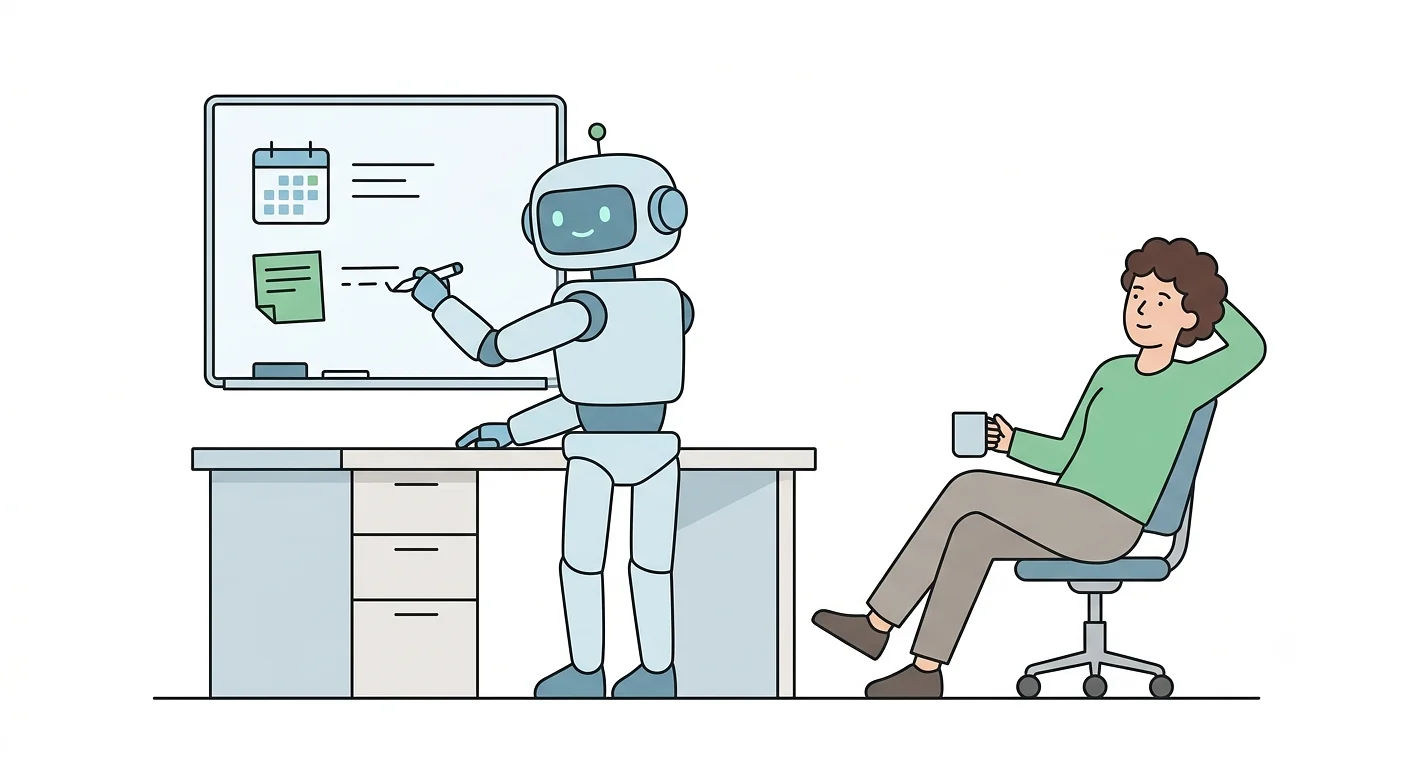
That is why the current AI discussion around Scrum Masters feels so uncomfortable. AI can summarize meetings, create Jira tickets, draft retrospective questions, update reports, detect patterns, chase action items, and remind people what they promised.
If that sounds like most of the Scrum Master role in your organization, the problem did not start with AI.
The organization had already reduced the role to work that can be automated.
And now AI is making that visible.
The Job Description Usually Gives It Away
Sometimes you can tell how an organization understands agility before you talk to anyone.
Just read the Scrum Master job description.
You will often find things like:
- Scrum Master / Project Manager
- track velocity and report KPIs
- schedule Scrum events
- moderate meetings
- manage the backlog
- ensure the team delivers
- remove impediments
- act as the contact person for the team
These are not innocent details. They reveal what the organization thinks the role is for.
The Scrum Master / Project Manager combination is especially telling. If your Scrum Master is also your Project Manager, you probably do not understand at least one of those roles.
The same is true when the Scrum Master is asked to manage the backlog. In Scrum, that is Product Owner accountability. The Scrum Master may help people understand accountabilities, improve collaboration, and make problems visible. But the Scrum Master is not the team’s backlog secretary.
And when Scrum Masters are asked to track velocity, monitor KPIs, and report numbers upward, the role is being used as a control mechanism.
That is not a small misunderstanding.
It changes the whole role.
The Role Gets Turned Into System Maintenance
Many organizations hired change agents and used them as ceremony administrators.
They hired people to challenge the system and then used them to maintain it.
That sounds harsh, but look at the actual work many Scrum Masters are asked to do. Schedule the events. Keep Jira clean. Chase the action items. Collect the numbers. Remind people about the process. Make sure everybody attends the meetings. Report whether the team is on track.
There is nothing evil about those tasks. Some of them need to happen.
But none of this was ever the heart of the role.
A strong Scrum Master helps a team become more effective. That can mean improving how people work together, helping them deal with conflict, removing systemic impediments, challenging habits that slow learning, and making problems visible that the organization would rather ignore.
And many of the hardest impediments are not inside the team.
The real impediment may be a manager who says they want self-management but still makes every important decision.
It may be a leadership team that rewards output while talking about outcomes.
It may be an organizational structure that creates dependencies faster than teams can manage them.
It may be a culture where people hide bad news because telling the truth is dangerous.
AI can help identify some of these patterns. But it cannot walk into that system, build enough trust for people to speak honestly, confront the people who benefit from the current setup, and help them change their behavior.
It cannot help a manager release control without making them feel that they are losing control.
It cannot turn conflict into an honest decision.
It cannot redesign a broken system of dependencies.
It cannot build an organization’s capability to learn.
That is where capable Scrum Masters create value.
The Real Issue Is Control
This is not about stupid managers.
That explanation is too easy and usually wrong.
Most leaders I meet are smart people who want to do the right thing for their organization. They are not trying to destroy agility. They are trying to protect the business with the control strategies they learned to trust.
And in many traditional organizations, control means direct control.
Who is doing which task?
When will it be done?
Is the team on track?
Why did this number change?
Who is responsible?
That kind of control feels safe because it is visible. You can put it in a spreadsheet. You can ask for a status update. You can assign a name to every item.
But it often fails at the level that matters more.
The company misses business opportunities. It reacts too slowly. It does not listen to customers enough. It cannot adapt when the market changes. It keeps controlling tasks while losing control of value.
Agility changes the level of control.
In a more agile organization, leaders may not know exactly which developer is doing which task at 10:30 on Tuesday. But they have better control over customer learning, adaptation, value creation, feedback, and business opportunities.
That is a different kind of control.
And it can feel like losing control before it feels like gaining control.
Agility Can Look Like Chaos From the Outside
This is where we need to be fair.
Some leaders fear agility because they have seen bad versions of it.
They have seen “everyone does whatever they want” called autonomy. They have seen teams stop coordinating and call it self-organization. They have seen unclear accountability, weak decisions, and a lot of noise.
Of course they fear chaos.
But real agility is not chaos. It is one of the few serious ways to deal with a complex world.
The mistake is understandable. The conclusion is still wrong.
If your response to that fear is to turn the Scrum Master into a reporter, scheduler, and team handler, you have not made Scrum safer. You have made it shallow.
You kept the language of agility and protected the old control model underneath.
That is why the Scrum Master role becomes so threatening when it is done well. A real Scrum Master eventually touches management behavior, decision-making, conflict, incentives, dependencies, and truth.
Not because they want to be difficult.
Because that is where many impediments live.
“Remove Impediments” Is Often Misunderstood
This is another place where job descriptions quietly damage the role.
They say the Scrum Master removes impediments.
That sounds reasonable until it becomes:
“You are responsible for fixing everything that blocks the team.”
That burns people out.
The Scrum Master cannot remove all impediments. They should not even try.
The real work is helping the team and the organization see impediments clearly, raise their heads beyond the current ticket, and think about how to remove those impediments together.
Sometimes the team can remove the impediment.
Sometimes the Product Owner needs to act.
Sometimes a manager needs to change a decision.
Sometimes the organizational design is the impediment.
If the Scrum Master is only allowed to work “with the team,” they are blocked exactly where the work becomes important.
The Scrum Guide is much broader than the admin version of the role. It describes the Scrum Master as accountable for the Scrum Team’s effectiveness and as serving the Scrum Team, the Product Owner, and the larger organization. That includes coaching, training, advising, helping people enact empiricism, and removing barriers between stakeholders and Scrum Teams.
That is not the same as scheduling meetings.
The Small Version of the Role Is Easy to Automate
This is why AI hits a nerve.
The smaller version of the Scrum Master role is vulnerable.
Meeting notes? AI can help.
Action items? AI can help.
Ticket creation? AI can help.
Retro questions? AI can help.
Status summaries? AI can help.
Pattern detection? AI can help.
If that was most of your contribution, then yes, your role is vulnerable.
But blaming individual Scrum Masters alone would be lazy.
Many were never trained to work at the deeper level. Some were pushed into the role because management decided to “do Scrum,” sent them to a two-day training, and handed them a task list. Others do have the capability, but their organizations do not want them to use it.
They are told to create change, but not to touch the things that need to change.
They are told to remove impediments, but not to challenge the managers who create them.
They are told to help the team become self-managing, but then they are made responsible for ensuring the team delivers.
They are told to support agility, but then they are asked to report velocity as if it were a productivity metric.
Then people wonder why the role has low impact.
The impact was designed out of it.
Scrum Masters Need More Than Ceremony Skills
There is also a challenge for Scrum Masters here.
The answer is not to protect the title.
The answer is to become harder to replace because your work actually changes something.
That means administrative competence is not enough. Good facilitation matters, but it is not enough. Knowing the events and artifacts matters, but it is not enough.
Scrum Masters need to understand teams, leadership, conflict, psychological safety, systems, product learning, and organizational change.
Research on Scrum team effectiveness points in the same direction. Effective Scrum is not just about running events. It depends on things like management support, autonomy, responsiveness, continuous improvement, and concern for stakeholders.
Research on psychological safety in agile software teams also reinforces the point: teams need conditions where people can speak up, reflect, and learn. That does not happen because someone scheduled the retro correctly.
It happens because the system makes truth safer than silence.
That is real Scrum Master work.
The Question AI Forces Us to Ask
So the lesson is not:
“AI can never replace humans.”
That is weak reassurance.
Administrative Scrum Master work is becoming easier to automate. That forces us to be much clearer about what the role is actually for.
The uncomfortable question is not:
“Will AI replace Scrum Masters?”
The uncomfortable question is:
“Did we ever allow Scrum Masters to do the valuable work that only humans can do?”
If organizations want Scrum Masters who create change, they cannot train them only in events and artifacts. And they cannot put them into a role design that punishes them the moment they touch the real impediments.
Stop hiring change agents when what you really want is ceremony administration.
Stop asking for agility when what you really want is the old kind of control with new vocabulary.
And stop blaming Scrum Masters for low impact when the role you designed made high impact almost impossible.